Learning Forward
How We Move Into the Unknown
In my last post, I wrote about how grief shut down my imagination—how my usually colourful, buzzing mind went silent, and the only thing left was movement: one sad, uncertain step at a time.
Looking back, I can finally name what those movements were:
I was learning forward.
Years later, while teaching systems thinking at OCAD U, I coined that phrase. My students weren’t “learning from experience” in the way textbooks describe it. They weren’t drawing from a stable past. They were learning into an emergent future- taking steps in a landscape that wasn’t finished yet.
And that’s what I had done too.
Learning forward is the “action-in-not-knowing” half of creativity.
It’s the part we rarely talk about.
We glamorize creativity as magic - bold ideas, genius imaginations - when in reality, most of it is messy, wobbly, creaturely movement.
What Learning Forward Actually Feels Like
It isn’t glamorous. It isn’t confident.
Honestly, it isn’t even always intentional.
Learning forward is what happens when:
the future fogs over
the instructions run out
your imagination goes quiet
the problem has no shape
you genuinely don’t know what you’re doing
Your body clicks into a different mode:
step → sense → adjust → step again
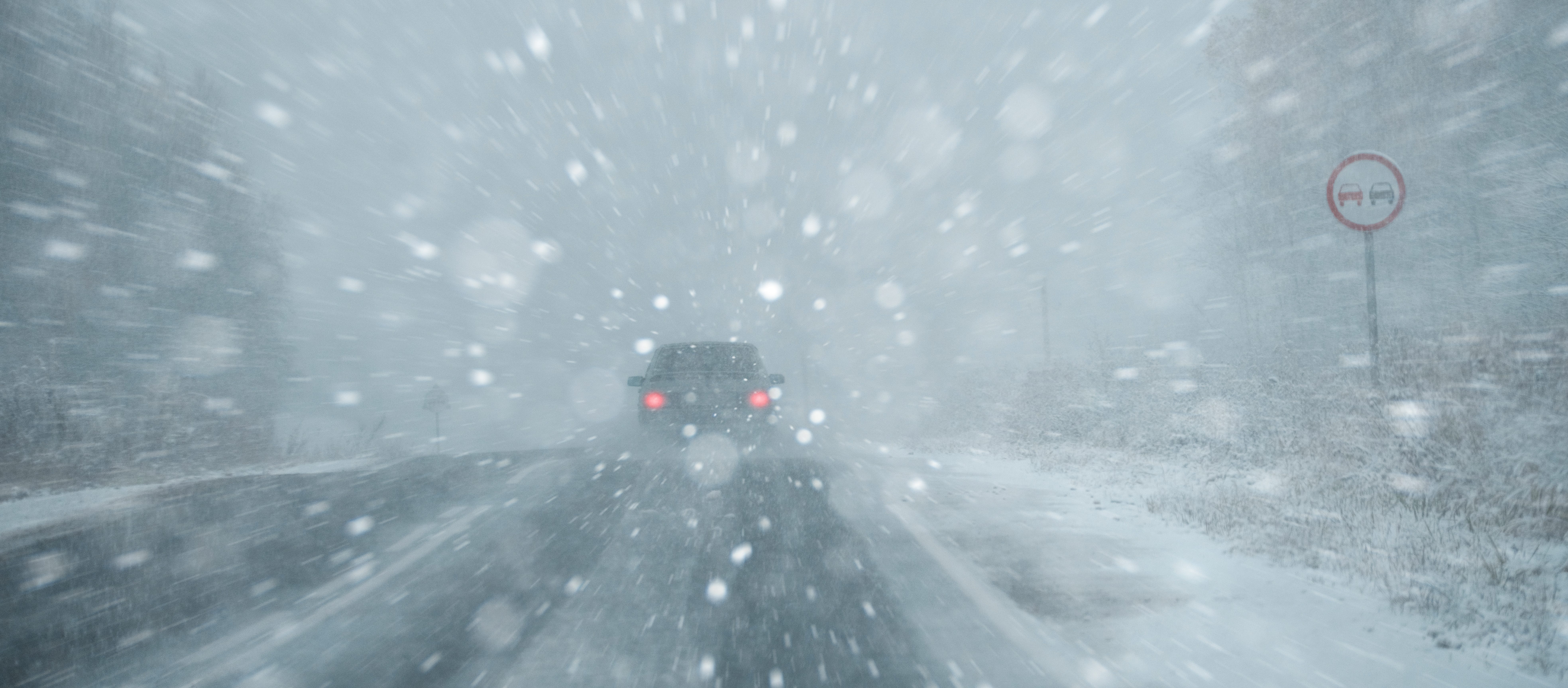
(If you’ve ever driven through a whiteout - sitting upright, hands tight on the wheel, seeing only a foot in front of you - you’ve tapped into learning forward. Your body becomes the instrument. Your senses take over where vision fails.)
This isn’t a method you need to adopt.
It’s a birthright. We’re born knowing how to do this.
We just get trained out of it.
We’re All Born Learning Forward
Watch a baby learning to walk.
They don’t wait to “understand walking.”
They don’t fall once and decide they’re bad at it.
They don’t treat wobbling as a personal flaw.
They try, adjust, try again - and we cheer and celebrate every attempt.
Now imagine dropping that same baby into the environments adults are expected to “succeed” in:
“Have you enrolled in Advanced Walking™?”
“How evidence-based are your steps?”
“Please optimize your gait metrics.”
This is what we do to ourselves.
We pretend learning only happens in childhood or classrooms.
But learning is a daily condition of being human.
And most adult environments are hostile to wobbling, experimenting, or uncertainty.
We hide mistakes.
We punish not-knowing.
We treat curiosity as a liability.
No wonder people fall apart the moment life stops making sense.
Design Didn’t Give Me This Skill—It Helped Me See It
Designers aren’t magical beings who tolerate ambiguity better than others.
We’re just trained not to panic in the wobble.
Sometimes the only way to figure out what to do next is to “move to making” - to let the hands lead when the mind can’t.
“Often the hands will solve a mystery that the intellect has struggled with in vain.”
- Carl Jung
During the worst stretch of my life, that instinct carried me. I wasn’t sketching or producing anything, but I was driven by the same engine: the part of me that moves first and understands later.
In grief, “moving to making” looked like:
getting out of bed
getting dressed
showing up at work
taking care of my kids
repeating the rhythm until it held
Only when life became barely stable again could I begin to “make” a new future: applying for my RGD, applying to OCAD, writing an academic paper I was sure I’d fail, completing my master’s degree - all things my imagination would never have predicted.
I didn’t get here through vision.
I got here through the wobble.
Learning Forward Is a Core Part of Creativity
Creativity = imagination + action in not-knowing.
Learning forward is the second half of the equation.
It’s what creativity looks like when imagination is too quiet to help.
It’s what leadership looks like when the map reaches its edge.
It’s what survival looks like when the world stops making sense.
Learning forward isn’t heroic.
It’s humble.
It’s creaturely.
It’s human.
And yet almost no one is encouraged to practice it.
Why It Matters Now
We need humans - all humans - who can take a step without a guarantee.
Who can feel their way forward when the future goes quiet.
Who can build the next normal instead of clinging to the old one.
We are already wired for this.
We just haven’t learned to trust it.
Because imagination only shows us futures built from what we already know.
But our actions can carry us into futures far bigger than our minds can currently picture.
The bridge between the two is our willingness to stand in uncertainty without running.
Hey folks, Gertie here!
I’m wondering - what kinds of thoughts come up as you read this?
Are there any questions or ideas that it spawns for you that you want to share?
Your comments and thoughts are most welcome - thank you for supporting my work!