
Photos and Frames
Using Cameras, Photography, and Frames as Helpful Tools for Seeing Systems
The other day I called my daughter over to look at an old photograph I had found online.
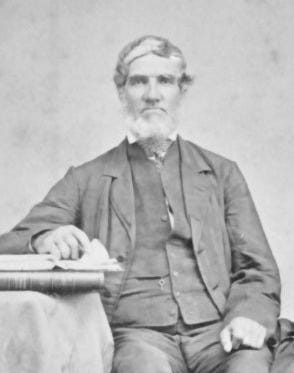
It was a picture of a distant ancestor, taken sometime between 1861 and 1875. When I looked at it, I immediately noticed that the man in the photograph looked a lot like one of her cousins.
So I asked her what she thought.
She studied the picture for a moment. Then she said:
“He looks mad.”
She paused.
“Everyone in old pictures looks angry. Probably because they had a hard life.”
I laughed - because I was surprised that she didn’t see the resemblance - but mostly because she had pointed out something really interesting.
(She has a gift for stating obvious realities to which I am often oblivious.)
If you look at early photographs, people look stern and stoic. It looks like life is austere - a black and white formal world with no smiles.
And if you grow up in a world where photography is everywhere, every day - a world of “say cheese,” Instagram, cat videos, and photo filters - it’s easy to assume that people in the past must have been very different from us.
But these early photographs don’t actually tell us very much about people’s lives.
They tell us more about cameras.
And it struck me that we make the same mistake with systems all the time.
We judge events in a system as though we are seeing “snapshots” of reality, but we rarely think about what lies outside the frame. We judge system outcomes - making decisions about the people in the picture - instead of thinking about the cameras and the environmental conditions that shape what we see.
The Camera Shapes the Face
When photography first appeared in the mid-1800s, taking a photograph was not quick or easy.
Early cameras required long exposure times. People had to sit completely still for several minutes while the image was captured. If they moved, the photograph would blur.
Photographers sometimes used metal clamps positioned behind a person’s head to help them hold still.
(Try holding a natural smile for three minutes without moving and you’ll understand the problem immediately.)
So the people in those photographs weren’t necessarily angry.
They were more than likely just figuring out a way to cooperate with the technology.
But the camera wasn’t the only influence on their pose.
For centuries before photography existed, portraits were painted. Those paintings were usually commissioned by wealthy or important people who wanted to project seriousness and authority.
Smiling broadly wasn’t considered particularly dignified.
(If you’ve ever seen old paintings that feature people baring their teeth, the subjects are more than likely portrayed as insane or drunk.)
When photography appeared, the expectations of portrait painting came with it.
More than this, photography was expensive. It was rare to own a photograph of yourself. A portrait photo served as a document - proof that you were important enough to warrant your image being captured.
“A photograph is a most important document, and there is nothing more damning to go down to posterity than a silly, foolish smile caught and fixed forever.”
Mark Twain
We Can Only Capture What’s Capturable
One of the earliest photographs ever taken shows a street in Paris called the Boulevard du Temple.
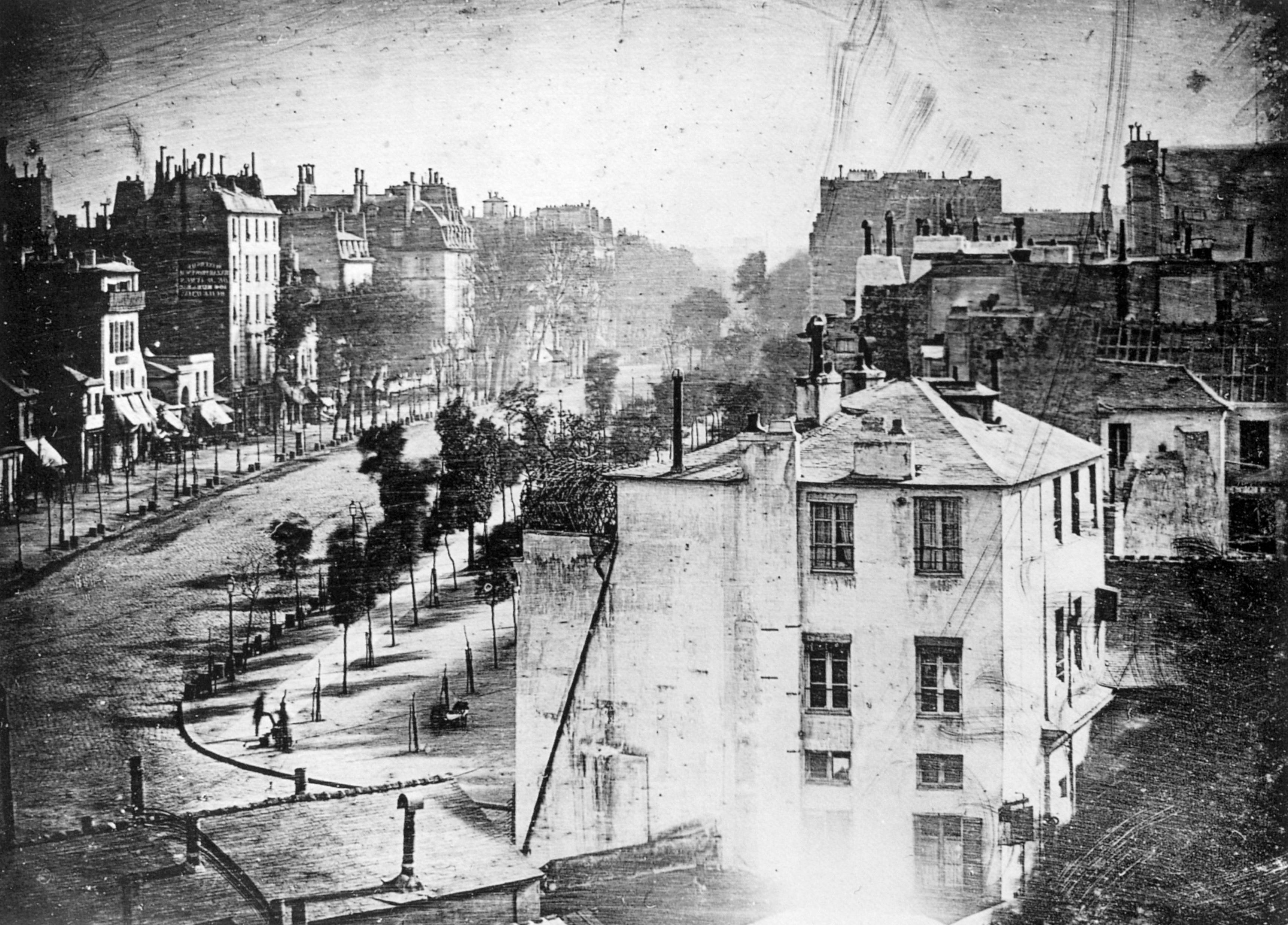
When you first look at the image, the street appears strangely empty.
No crowds.
No traffic.
Almost no movement.
But the Boulevard du Temple was one of the busiest streets in the city.
The reason the street looks empty has nothing to do with what was happening in Paris that day.
It has everything to do with the camera.
Taking this picture required an exposure time of about ten minutes. Anyone walking down the street moved too quickly to appear in the image.
The only visible people are a man getting his shoes polished and the person doing the polishing - because they stayed still long enough to be captured.
The photograph seems to show a quiet street.
But what it actually shows is the limitation of the camera.
The Photograph Is an Outcome
When my daughter first looked at the photograph of our ancestor, she assumed the expression reflected the personality of the man in the picture.
“He looks mad.”
But a photograph isn’t a window into someone’s personality.
It’s the result of many interacting conditions:
the subject
the environment
the camera
the film (or medium of capture)
the exposure time
the photographer’s decisions
the cultural expectations of portraiture
the cost of photography
the purpose of the image
In other words:
a photograph is an output of a system.
If you start seeing photographs this way, something interesting happens.
You stop treating images as simple truths.
You start asking questions about how those images were produced.
Blaming the Portrait Sitters
When organizations try to change how systems work, the conversation often turns to the people in the system.
We talk about:
culture
change management
communication strategies
alignment
collaboration
mindsets
All of these things matter.
But let’s imagine for a moment that changing a system to produce different outcomes is like trying to take a different kind of photograph.
Often systemic change efforts begin and end with people.
If we think about changing photographs from the perspective of people in the system, we might try bringing everyone together to align on the purpose of the photo. We might use education, leadership modeling, or communication strategies to shift the culture.
We might show people how to be less formal in their pose.
We might teach them to “say cheese.”
We might tell them to wear something colourful and vibrant that will “pop.”
And usually people genuinely want to work together to change the outcomes of their systems. They’re hopeful they can take photos that better reflect their intentions.
So we think the work has been done when people are aligned and ready to take different photographs.
It feels great.
We’re aligned!
We’re moving forward in a new way!
And then we take out our old cameras and expect them to produce shiny modern photos.
When the photograph doesn’t turn out the way we hoped, we get frustrated with the people in the picture.
They need to collaborate better.
Communicate better.
Align better.
We blame the portrait sitters for not going along with the plan - instead of asking ourselves about the limits of our cameras.
We Can’t See Whole Systems in A Single Frame
In the 1870s people argued about something surprisingly simple.
When a horse gallops, do all four hooves ever leave the ground at the same time?
Painters - observers and makers of images - thought they knew the answer. But they were trying to represent motion using single images. So they illustrated a horse’s stride with all four legs stretched out in a flying motion.
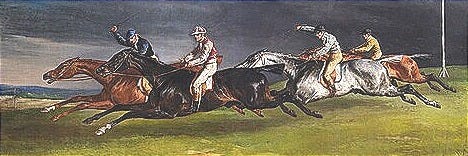
A photographer named Eadweard Muybridge set up a row of cameras along a racetrack. As a horse ran past, each camera captured a frame.
When the photographs were arranged in sequence, people could finally see something that had been invisible before.
Motion.
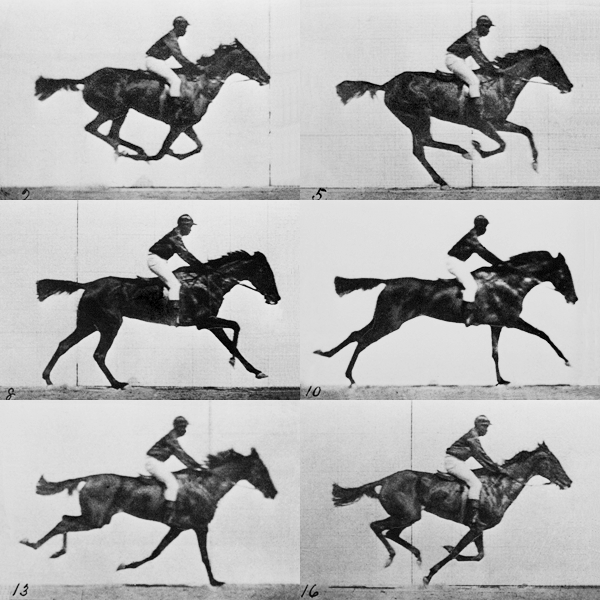
Yes - all four hooves do leave the ground.
But not in the way artists had imagined.
For years people had been trying to understand movement by looking at single images.
But motion doesn’t live in a single frame.
It only becomes visible when you see the sequence.
Systems work the same way.
Events are frames - like individual photographs.
Understanding how a system works means looking at many frames over time, not just one.
Structures Change Cultures
In 1888 Kodak introduced a portable camera that ordinary people could use.
Suddenly photography didn’t require a formal studio or a professional photographer.
People could take pictures themselves.
And when the camera changed, the photographs changed too.
Instead of stiff formal portraits, we began to see something different:
children playing
families gathered outside their homes
friends laughing
people relaxing on beaches
If you only looked at the images themselves, you might assume something profound had changed in society.
As if people had suddenly transformed from stoic portrait sitters into cheerful beachgoers.
But the people hadn’t changed.
The camera had.
Once the structure changed, behaviour changed too.
Over time those behaviours became cultural norms.
Seeing Beyond the Frame
The photograph my daughter was looking at was of my ancestor, Daniel High (Hoch).
He was one of the very few farmers in our family history to be photographed in the 1800s.
At first glance he looks exactly like what you might expect: a stern Pennsylvania Dutch farmer with ardent Mennonite beliefs who came to Canada in the mid-1800s.
But as I started learning more about him, the photograph became less a way to understand him and more a way to understand his time.
Daniel Hoch wasn’t just a farmer.
He was one of Canada’s first Mennonite ministers — and a driving force during a time of intense debate and division within the earliest Mennonite communities in nineteenth-century Ontario.
Historical accounts describe him as energetic, curious, radical - and stubborn.
(Ahem… no family resemblance here.)
He travelled.
He sought out new ideas.
He challenged authority.
In other words, he sounds like a complicated human being.
Not just a stern face in a photograph.
When I look at this image now, I see behind the camera.
It’s a carefully composed portrait shaped by the expectations and technologies of its time. He was being photographed as part of his installation as a minister in the Mennonite church. He needed to look like a dignified and respected leader that people could follow.
He was photographed because he served a function in a larger religious structure that was establishing roots in Canada.
This man is a farmer, a husband, a father, a reformer, a religious leader - someone whose life sounds much richer and more complicated than a single black-and-white photograph suggests.
The photograph isn’t just an image of a man.
It’s an artifact of the system that produced it.
Surface is Outcome.
Structure is Explanation.
Someday people in the future will look at the systems we built and wonder why we behaved the way we did.
The things we are building now will someday be the “broken” or “old-fashioned” things that future generations try to change.
They’ll see the surfaces of the outcomes.
But will they understand the structures that produced them?
If we don’t think about the cameras - and all of the things that lie just outside the frame - we limit what we can change.
And if we don’t recognize how powerfully structures shape behaviour, we may never fully understand the consequences of the systems we are building for futures we don’t yet inhabit.